
You don't always have to travel far to find something wild. Sometimes it finds you first.
5 March 2026
Wildlife Photography in Scotland — From Edinburgh to the Highlands. A personal photo essay on Scotland's wildlife — red deer, foxes, short-eared owls, adders, red kites and more, photographed around Edinburgh, the Lothians, and the wider Highlands.
Scotland is one of the best places in Europe to photograph wildlife. From the coastlines and nature reserves of East Lothian to the open moorland of the Highlands, the variety of species on offer — red deer, foxes, raptors, adders, hares — is extraordinary. This is my own encounter with some of them.
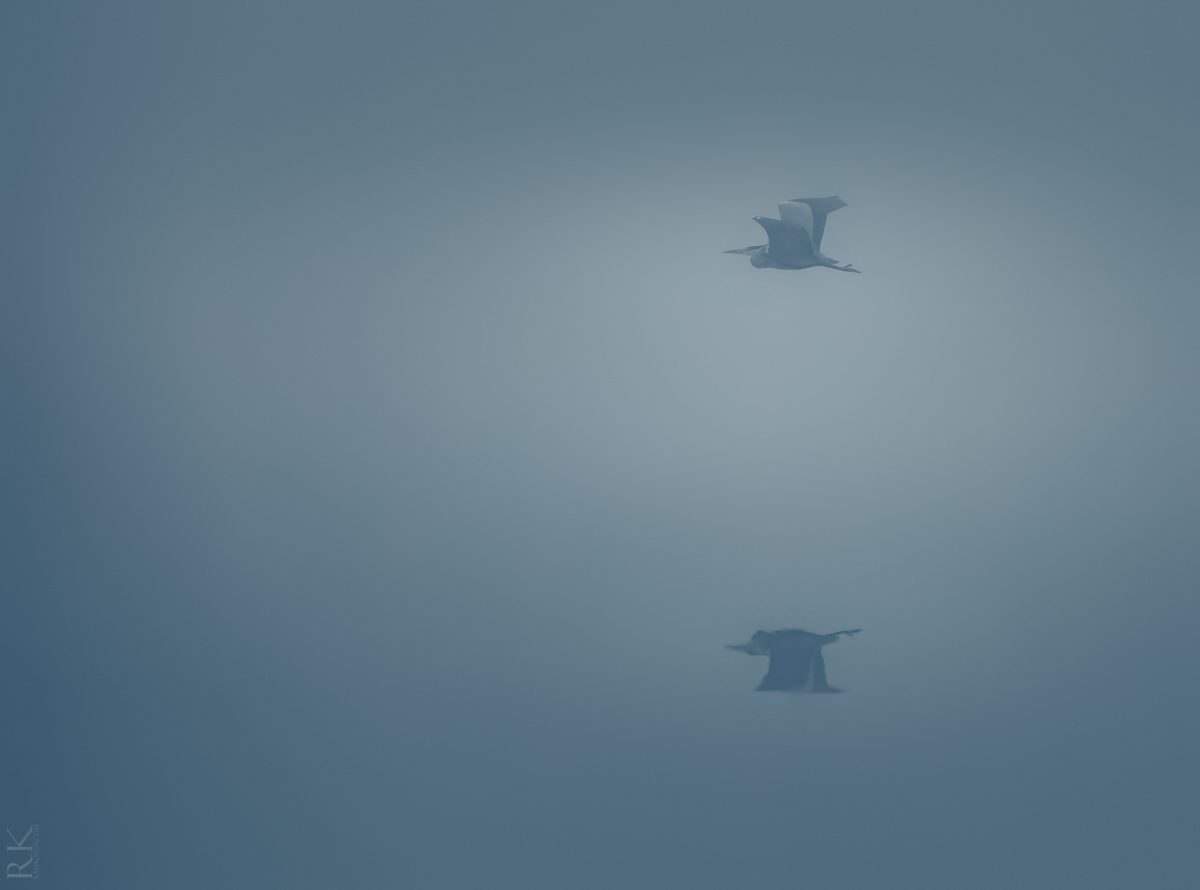
A haar had settled over the Firth of Forth for a few days — that particular Edinburgh fog that arrives without apology and blends the sky and the sea into a single, pale, breathless thing. I was out with my camera when I found the heron. It was flying low over the water, and below it the fog had turned the surface into a mirror — the bird and its reflection moving in perfect unison, one real, one echo, existing in the same frame in perfect silence.
I didn't plan that photograph. I just waited long enough for everything to go quiet.
That image has become something of an emblem for what this blog is about. You go out looking for one thing and come back with something else — not just a picture, but a thought you didn't know you were having. Wildlife photography, at its best, is a form of reflection in both senses of the word. What you find out there, and what it quietly shows you about yourself.
This post is a wander through some of those encounters — from my own back garden, through the parks and coastlines around Edinburgh, and out into the wider, wilder reaches of Scotland. Some of these took minutes. Others took months. All of them have stayed with me.
Most wildlife photography begins further from home than it needs to. We drive for hours to stand in a hide when, half the time, something extraordinary is already happening just outside the kitchen window.

Take Zoe. Zoe is a common blackbird — a female, brown and quietly elegant — who has taken to visiting my garden with enough regularity that naming her felt entirely reasonable. Her song, on a still morning, is something I genuinely look forward to. There's a reason blackbirds have been written about and listened to for centuries. Spend enough time with one and you understand why.


scroll →
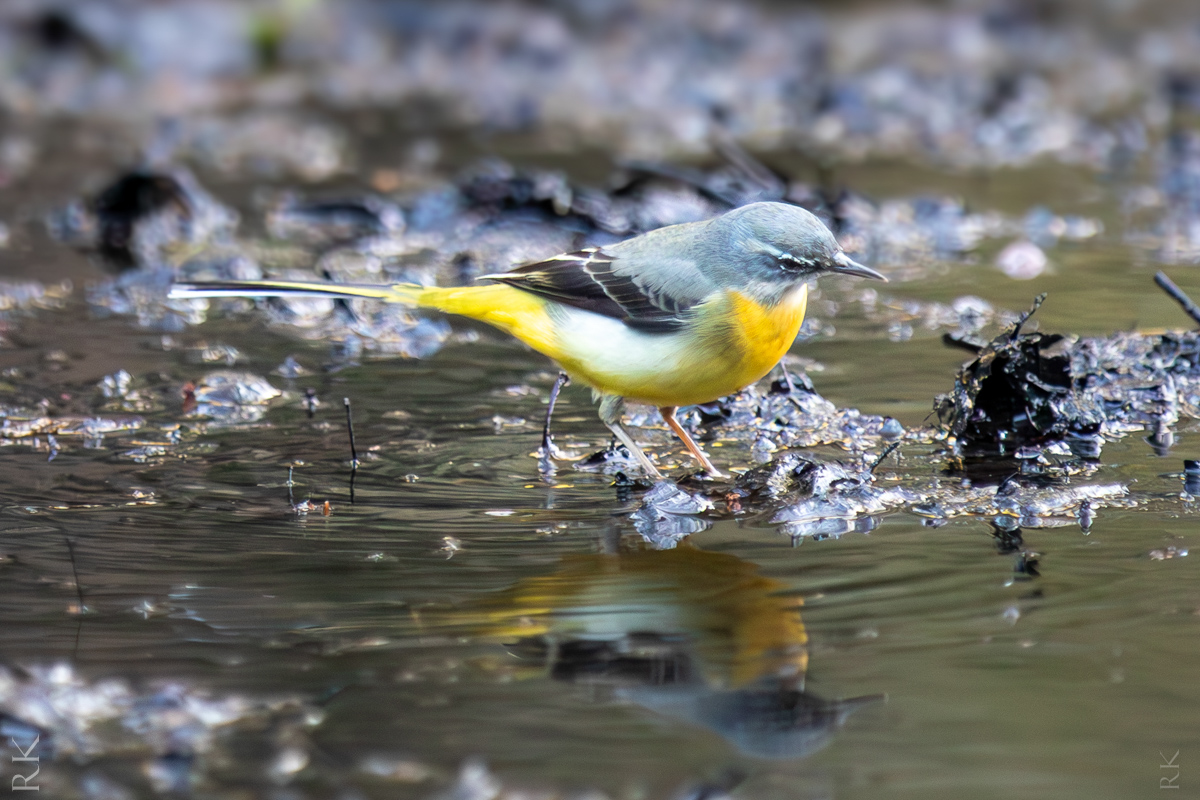
The garden also brings blue tits, dunnocks, and a wagtail that I've been watching closely — it looks very much like it might be building a nest in my local park. I'm hoping to photograph chicks later in the year. Although I'll admit that hope comes with a small knot of worry attached: I spotted a kestrel in the area for the first time in a few years recently. Kestrels love hunting wagtails. Nature is beautiful and also, occasionally, quite difficult to watch.

Get lower still, and closer, and the garden becomes another world entirely. Snails on wet grass after rain, their shells catching the light in ways that genuinely surprise you through a macro lens. And spiders — which brings me to Mary Parker.

Mary Parker is a female spider who lives in my loft. A few years back she made a nest and laid hundreds of eggs. She even shed two of her legs (they grew back quickly), which became the first source of food for the hatchlings. I photographed the whole thing. The loft, it turns out, has its own ecosystem if you pay enough attention. The garden is absolutely teeming, at every scale. You just have to decide to look.
I was heading home after a long session photographing deer when the fox appeared.

It came from behind thick bushes — young, alert, moving through the forest with that particular lightness that foxes have, as if they're never quite fully committed to any surface. I was in my ghillie suit, which meant that when I scooched down slowly, I became — at least for a moment — something the fox couldn't immediately categorise.
It stopped. And it looked at me for over a minute.
That minute felt very long and very still. The fox wasn't afraid. It was curious — head tilted slightly, ears forward, working through whatever calculation foxes make about uncertain things. Then it made its decision, turned, and disappeared back into the trees to go about its actual business, which apparently involved hunting pheasants.
I've been lucky with foxes over the years, and lucky in the sense that the luck is partly manufactured — the hours put in, the spots learned, the patience developed. But nothing quite prepares you for the directness of that gaze. A fox that has decided you're probably not dangerous is an animal that will look you in the eye with complete frankness, and it is one of the more honest experiences available to a wildlife photographer.


If you want to understand patience as a photographer, spend a few seasons with deer.


scroll →
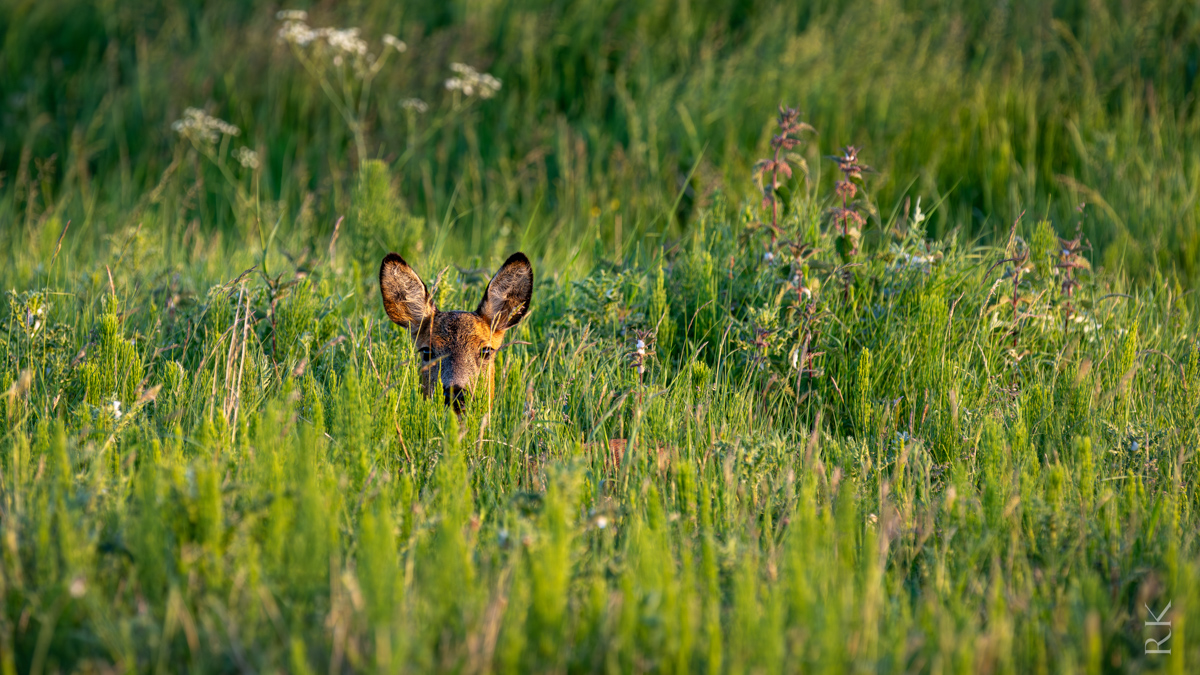
I've photographed them across a range of locations — roe deer in the fields and woodland edges around the Lothians, fallow deer with their dappled flanks and that slightly ornamental air about them. The fallow deer, in particular, produce moments of particular tenderness. There was an evening at Tynninghame — a beautiful sunset, that golden late-light that makes everything feel significant — when a young fallow deer wandered close and stopped, looking over with what I can only describe as cautious interest. I hoped he might come a little closer, maybe even say hello. But his parents called him back, and he went, and that was that. A small, unhurried heartbreak, the way wildlife encounters often are.

The images I treasure most, though, are the young stags. The very first antlers — barely more than two velvet nubs above a young animal's eyes — carrying all the quiet promise of what they'll eventually become. There's something affecting about photographing a creature still figuring out the shape of itself.


scroll →
The mature stag is the opposite of all that. When you find one in open country, in good light, the encounter has a weight to it that I still haven't found adequate words for. The antlers, the eyes, the stillness the animal can produce in you. A kind of involuntary respect. I've learned more about slowing down from photographing deer than from almost anything else.


scroll →
Up close with a baby hare at Aberlady, on a warm afternoon.

It grazed. It stretched. It scratched. It was, as far as I could tell, having an absolutely lovely time and entirely unbothered by my presence once I'd stilled myself enough to fall beneath its notice. I snapped a few photographs and then left quietly without disturbing it, which felt like the right thing to do and also felt, faintly, like a small act of respect toward something that had trusted me with its afternoon.

Hares have a quality that's hard to account for rationally. They're larger than you expect the first time, golden-brown and built for pure speed, and there's something about them — the long ears, the amber eyes, the sense of alertness even in repose — that makes them feel like creatures from slightly older stories. Not supernatural. Just somehow beyond the ordinary.
Photograph a hare if you ever get the chance. And if you don't, you're in good company.
People are always a little surprised when I mention the snake.

Scotland's wildlife photography is heavily weighted toward the majestic and the feathered. Stags, raptors, puffins. Nobody leads with the reptiles, which is a genuine shame, because Scotland is home to two native species that are beautiful, elusive, and almost entirely overlooked: the common lizard and the adder — the UK's only venomous snake, and a creature seen by far fewer people than you might imagine.
I found mine basking. That's usually how it goes — a slow morning, warm sun on a south-facing slope, and then a shape among the rocks that gradually resolves into something unmistakable. The zig-zag pattern along the spine. The absolute stillness of an animal that has decided it is already invisible, and is not wrong.

The common lizard I found near Dunkeld — also utterly indifferent to my presence once I'd moved slowly and quietly enough to become beneath notice. Small, quick, bronze-scaled in the right light, and deeply satisfying to photograph well.
These are animals that reward exactly the same skills as everything else on this list: patience, quietness, and a willingness to get your elbows wet. Scotland has more wildlife than most people realise, and some of it genuinely surprises them. I think that's worth celebrating.
There's a particular quality of attention that a raptor demands. You feel it before you've consciously registered what you're seeing.


scroll →
Red kites were extinct in Scotland for the better part of a century — persecuted out of existence and gone from skies that had always known them. They were reintroduced from the 1980s onward and have, quietly and steadily, come back. I had a memorable encounter with one on the Black Isle: it became very intrigued by my dog and hovered around us for a good few minutes, banking and tilting, apparently trying to work out whether a pointer constitutes a threat, an opportunity, or simply a novelty. When a red kite hovers above you in full sunlight, that forked tail spread, russet wings catching the light, the history of its absence and return is right there in the frame with it.


scroll →
The buzzard is everywhere by comparison — Scotland's most common large raptor — and perhaps underappreciated for it. But get one perched in good morning light and it is a magnificent animal. The depth in those eyes. The casual authority of a bird that has no particular reason to be in a hurry about anything.

Then the sparrowhawk. I was walking through my local park when she came whizzing through — fast, low, purposeful, gone almost before I'd registered what I was seeing. The female sparrowhawk is substantially larger than the male, one of the most pronounced size differences of any bird species, and when she appeared briefly in my viewfinder I was entirely unprepared for how present, how there she felt. A kestrel in the same park would complete something. I'm watching for it.
And then there was the eagle.

I'm not going to pretend the photograph is good. I was completely unprepared — no time to think, no time to adjust, just a large shape rising over a loch and the instinct to point a camera at it and hope. The image is what it is. But I was there. An eagle over a Scottish loch, close enough that there was no question of what I was seeing, and for a few seconds the whole world narrowed down to that single fact. Some encounters don't need a great photograph. They just need to have happened.
Back to still water, and the birds that make it their home.


scroll →

The heron is a study in deliberateness. It does not fidget. It does not hurry. It chooses its position, commits to it, and becomes — for all practical purposes — part of the landscape. Photographing a heron teaches you something about commitment to a posture, and about how stillness, held long enough, becomes a kind of power.

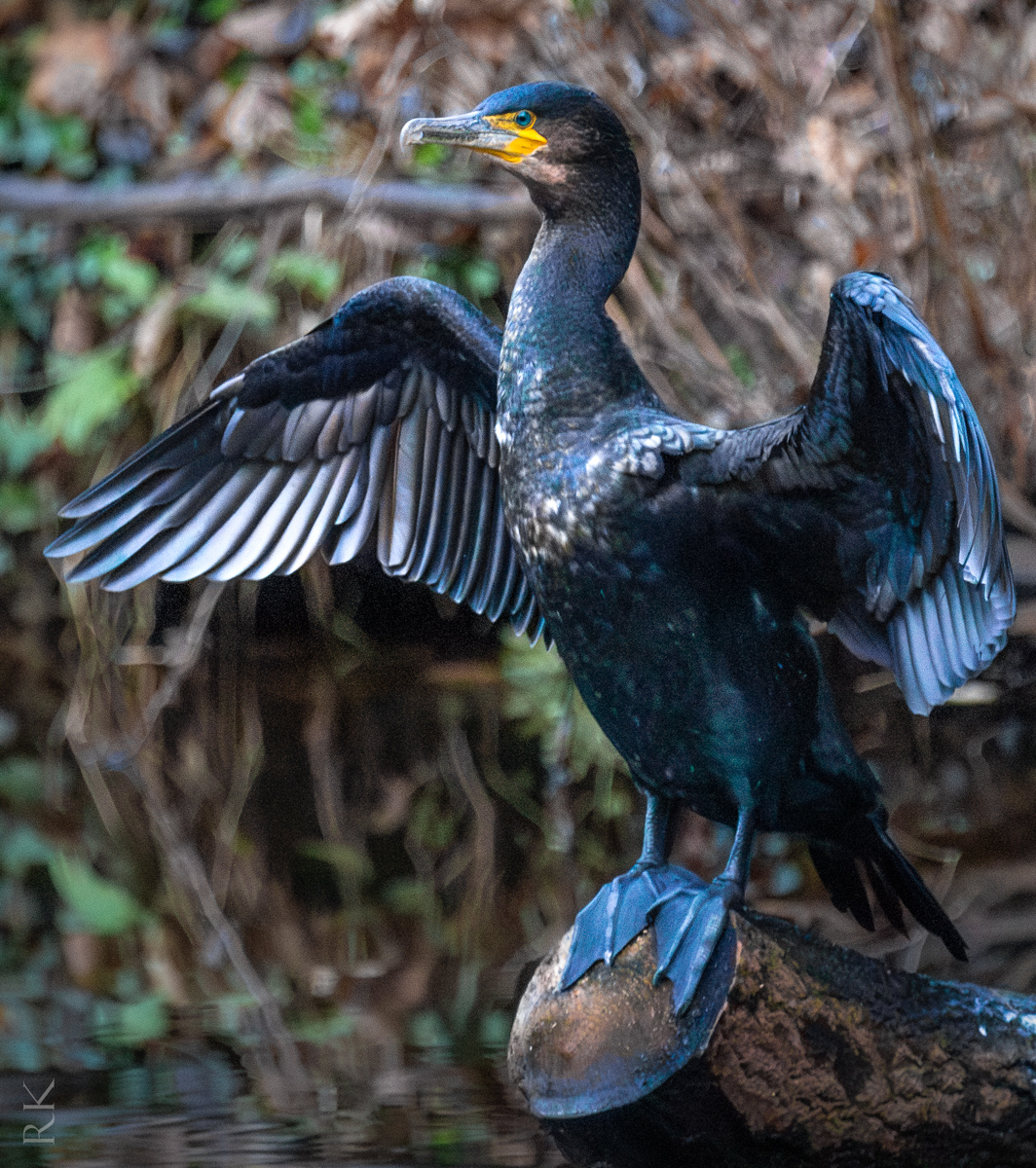
Then there's my cormorant.

I say my cormorant because he — or she, it's hard to tell — has taken to hanging around the spot where I bring my dog for a swim, sitting on a log with that heraldic wings-spread pose, drying in the sun with complete indifference to both of us. There's something companionable about a bird that simply gets on with its business regardless of your presence. I've photographed this bird more times than I can count. We have an understanding.


scroll →
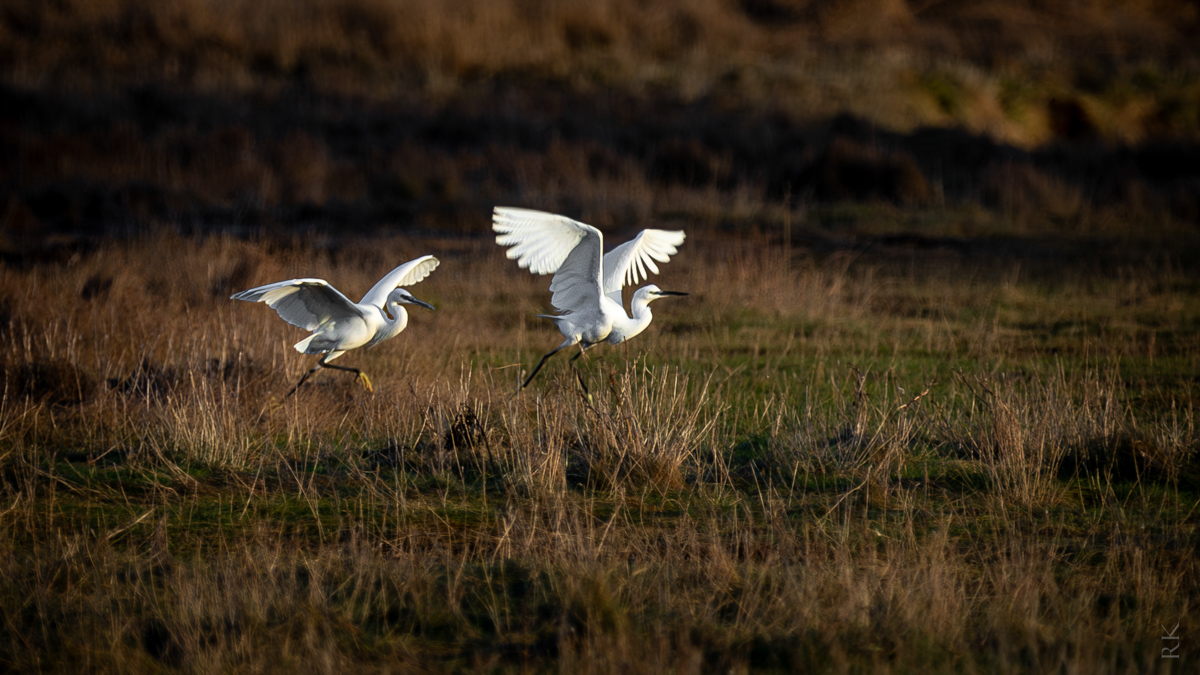
The egret is a more recent presence. Little egrets have expanded their range northward over the past few decades — one of the rare pieces of genuinely good wildlife news — and seeing one on a Scottish riverbank still feels faintly extraordinary. They're startlingly white against the browns and greens, slightly unreal, as if the world is briefly showing off.

And then there was the haar. The Firth of Forth fog. The heron and its reflection. Some photographs arrive fully formed, and all you have to do is be there.
I want to say something about the yellowhammer, even though it won't make this post trend.


scroll →
It's not a dramatic bird. It doesn't soar, or hunt, or arrive with centuries of mythology attached to it. It's a small farmland bird, vividly yellow, with a song — a little bit of bread and no cheese — that used to be the sound of summer fields across the whole of Britain. It is significantly less common now. Changes in farming, loss of hedgerows, loss of the weedy margins where it feeds. You can still find yellowhammers if you know where to look and are prepared to look carefully and quietly.
I photographed mine on tall tree, in good morning light, and I sat with the image for a long time afterward.
I don't want to be heavy-handed about this. But there is a reason to linger on the yellowhammer, precisely because it doesn't demand your attention the way a stag or a red kite does. The quiet things, the small gold things, deserve to be noticed. Especially now.
I'll finish with the short-eared owl.


Most owls are creatures of darkness, heard more than seen. The short-eared owl is different. It hunts in daylight — quartering low over open moorland and rough grassland, tilting and banking on those long wings, covering ground with a focused, unhurried intensity that is unlike anything else you'll see in a Scottish landscape. When one appears, you feel it before you've consciously registered what you're looking at. Something about the flight pattern, the silence of it, the sense of absolute purposefulness.
Photographing one on the hunt is a lesson in tracking something that doesn't follow predictable lines. It goes where the prey is, which is wherever it wants, and your job is simply to keep up and stay ready. When you get the shot — wings angled, eyes locked on something in the grass below — it's one of the more electric feelings available behind a camera.
There is something in watching a short-eared owl hunt that cuts to the heart of why I do all of this. You go out with a camera to look at the world. And the world, if you're patient and quiet and lucky enough, shows you something that takes your breath clean away. You come home slightly different from how you left.
That's what reflection means to me. Not just the image in the water, though I love that too. The encounter itself. The moment when the wild world and your world briefly overlap, and you're present enough to notice.
Scotland is full of those moments, from the Firth of Forth on a foggy morning to open moorland at dusk with an owl cutting through the last of the light. All you have to do is go looking — and then, crucially, go quiet.

One last thing before you go — a few-day-old duckling. An innocent wee ball of fluff, which felt like exactly the right note to end on. The world is serious and it is also, sometimes, just this.
If you'd like to see more from these encounters, I share wildlife photos — and much more — regularly on my blog and on Mastodon. The best of them find their way into the portfolio too.