
22 April 2026
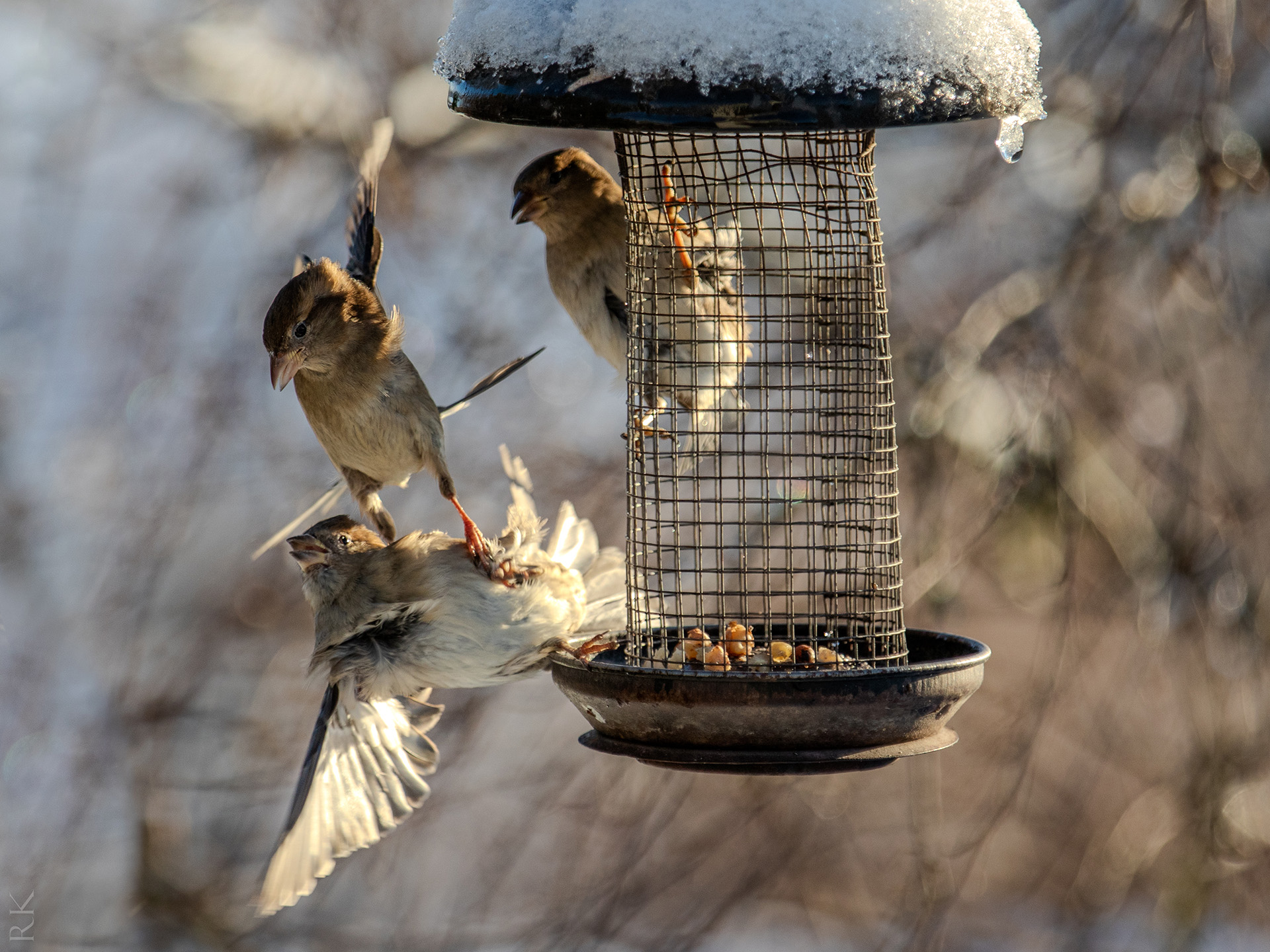
I live in Edinburgh. On my evening walks with my dog, Pojke, I pass the same spots where neighbours leave food out for foxes. Chicken bones — raw, cooked, it varies. Pastries. Casseroles. Sometimes birthday cake leftovers.
I partially understand the impulse. Foxes are beautiful animals. Wanting to feed them feels like care. But I've been reading the science, and what I've found troubles me. This is not a post about judging neighbours. It's a post about what the evidence actually says: about birds, mammals, insects, and what people who genuinely love wildlife should be doing instead.
The UK has only 50.3% of its biodiversity remaining, placing it in the bottom 10% of countries globally, worse than almost every nation in the EU except Ireland and Malta.1 This is not a controversial claim. The Natural History Museum published this data in 2020, and it should have shocked us all into action.
State of Nature 2023 builds on that horror with specificity. One in six species assessed are at risk of being lost from Great Britain entirely.2 Forty-three percent of birds are at risk. Species studied have declined on average by 19% since 1970. And only 14% of important wildlife habitats are found to be in good condition. This is from a baseline that was already devastated. The UK was once almost entirely covered in rainforest. Those trees were felled for shipbuilding, paper, and to make way for livestock grazing. With that loss went the wildlife that depended on them. But the real acceleration came later: in the last 50 years, modern agricultural intensification has compressed centuries of habitat loss into decades. We're not just living with the legacy of historical deforestation. We're actively accelerating it.
Consider greenfinches specifically. They have declined by 67% in numbers recorded since the Big Garden Birdwatch began in 1979.3 That's not a gentle slope. That's a collapse.
This is the country where millions of households were encouraged to put up bird feeders year-round. That tension, between a nation whose wildlife is collapsing and widespread advice to feed birds, is worth examining carefully.
In 2024, following growing scientific concern about supplementary feeding, the RSPB (Britain's largest wildlife charity) commissioned a full literature review of the effects.4 In December 2025, they suspended the sale of bird tables and flat feeding surfaces.5 Their own evidence base was telling them something.
This apparent contradiction deserves understanding. RSPB's mission statement reads: "Our purpose is to advance the conservation of birds, other wildlife, and the natural world, by protecting and restoring habitats and landscapes, saving species and connecting people to nature, for public benefit."6 The clause that matters is "connecting people to nature, for public benefit."
This creates an institutional tension. Supplementary feeding is the easiest, most accessible way to connect people with wildlife. It sells products. It generates engagement. It makes people feel good. RSPB has a mission obligation to public benefit alongside animal welfare, which means their guidance is shaped by both. Moreover, RSPB is not a government organisation but a private company with charitable status. They have financial incentives (donations). An organisation that tells millions of people "don't feed birds" risks losing donors who find that discouraging.
This is not a criticism of RSPB as an organisation. They do valuable conservation work. It is an observation that institutions with complex missions sometimes produce guidance that serves those missions rather than the animals. In 2026, they updated their recommendation to feeding only in winter. This is progress, but it's also a perfect example of cherry-picking one narrow, context-specific benefit while downplaying larger systemic harms.
Here is what the science actually says.
In 2021, researchers Shutt and Lees published a paper in Biological Conservation with findings that deserve close reading.7 Their abstract captures something most people miss:
"Generalised provisioning is enthusiastically promoted by many conservation organisations as a means to foster connection with nature and help wildlife. However, such a vast input of additional resources into the environment must have diverse, ecosystem-wide consequences. Direct effects upon recipient taxa have garnered most research interest, and are generally positive in leading to increased survival, productivity and hence population growth. However, we argue that the wider implications for the recipients' non-provisioned competitors, prey and predators are underappreciated and have the potential to generate pervasive negative impacts for biodiversity. The impact of provisioning has also hitherto been considered predominantly in urban contexts, overlooking the movements of wildlife to and from provisioning sources and the widespread nature of both human settlements and provisioning, underappreciating the potential scale of impact. Using a case study of UK garden bird food and nestbox provisioning, we hypothesise how well-intentioned provisioning could be contributing to widespread ecological community change and homogenisation. This may consequently help drive declines in species of conservation concern by asymmetrically benefitting common and adaptable species, leaving their competitors exposed to enhanced direct competition, hyperpredation, mesopredator release and heightened disease transmission risks."
The key insight: feeding doesn't just help the animals you're feeding. It asymmetrically benefits common, adaptable, aggressive species (collared doves, magpies, corvids) at the expense of the more vulnerable species those animals compete with, predate, or displace.
What does "mesopredator release" mean in practice? When you feed magpies, you're not just feeding magpies. You're funding their predation on ground-nesting songbirds' eggs and chicks. A magpie with stable food reserves from your feeder invests that energy into predation rather than foraging. You are not feeding the birds that need help. You are feeding the birds that are doing fine, and giving them an advantage over the ones that aren't.
The scale compounds. Shutt and Lees emphasize that provisioning is now "widespread," not confined to isolated gardens. When you scale from "one person feeding foxes in Edinburgh" to "millions of households across the UK doing this," the ecological effects shift from local to landscape-level. That's where the "homogenisation" becomes visible. Common species flourish everywhere, specialists decline everywhere, and biodiversity flattens into sameness.
Greenfinches have declined by 67% since the Big Garden Birdwatch began in 1979. The main cause is disease, specifically Trichomonas gallinae, a parasitic infection hypothesised to have spread from pigeons to finches via supplementary feeding stations.8
The parasite lives in pigeons' throats. At feeders, birds share perches, drink from the same water, and feed in crowded conditions. Finches, which didn't co-evolve with this parasite, are susceptible. In natural conditions, scattered feeding on seeds in fields, multi-species flocks don't congregate at single points repeatedly. But at a bird feeder, they do. Every day. For months.
In 2018, researchers conducting a 25-year national surveillance programme documented the spread of finch trichomonosis, Paridae pox, passerine salmonellosis, and mycotoxin contamination of bird feeders across Britain.9 Their findings are stark: "Large multi-species congregations of birds can occur at supplementary feeding stations, repeatedly over many days, increasing the risk of intra- and inter-specific pathogen transmission beyond that likely to occur naturally."
A second case: Paridae pox spreads similarly through blue tit and great tit populations at feeders. This is not an outlier. It's a pattern.
RSPB's recommendation to feed "in winter only" addresses scarcity but does not address disease. Winter feeding still concentrates birds and creates transmission opportunities. The recommendation cherry-picks one benefit while ignoring a systemic harm.
There is a circular harm at the heart of commercial birdseed that almost nobody talks about.
Bird seed is grown using neonicotinoid pesticides. Those pesticides devastate insect populations, the actual food source birds evolved to eat. UK flying insects have declined by 58.5% between 2004 and 2021.10 We are feeding birds seed grown using pesticides that destroy the insects those birds are supposed to eat.
Neonicotinoids harm birds directly. House sparrows, partridges, and mallards exposed to neonicotinoid-treated crops suffer lower survival rates, reproductive failures, and behavioural abnormalities.11 They also harm the insect base everything depends on. An 18-year study tracking neonicotinoid use on oilseed rape found links to extinction rates in wild bee populations.12
RSPB has researched this. They have assessed the risks to farmland birds of consuming neonicotinoid-treated seeds.13 They know. And they continue selling the seed.
The logic is understandable. Where do you find neonicotinoid-free birdseed widely available? The alternatives are limited. To recommend against commercially available seed without offering a viable alternative would be to recommend that people stop feeding birds entirely, which conflicts with RSPB's mission to connect people with nature.
But this is the crux: the seed industry profits from both the pesticides and the seeds. RSPB's continued promotion of birdseed, even with caveats about winter-only feeding, undercuts their own conservation goals. Every kilogram of commercial birdseed sold represents hectares of insect-killing pesticide application.
On those evening walks past the chicken bones and casseroles, I'm seeing more than kindness toward foxes. I'm seeing the indirect funding of an industrial food system with poor welfare record and the introduction of antibiotic-resistant bacteria directly into the wild food chain.
But there's a more immediate harm. Research at Nottingham Trent University examined the macronutritional profiles of food offered by UK households to foxes, badgers, and hedgehogs.14 The food is consistently low in protein and high in carbohydrates and fats, the precise opposite of what these animals need. A fox's diet should be protein-rich. Casseroles and pastries are the opposite.
Secondly, when habituation removes fear responses, disease becomes harder to recognise in populations. Tameness is also a symptom of toxoplasmosis, a parasite that destroys natural caution.15 A habituated fox population is potentially a diseased fox population not yet recognised.
Moreover, feeding increases group size. Larger groups increase disease transmission. They also increase human-wildlife conflict: more foxes, closer to houses, creating more opportunities for conflict.16 The animals people are trying to help end up reported as nuisances, get trapped, and get culled.
But the deepest harm is invisible.
The vast majority of supermarket chicken comes from factory farms. In 2025, I examined every single raw chicken product in my local supermarket's fridges. Breast, wings, thighs: across dozens of options, every package contained factory-caged birds. Not one of those hundreds of birds had ever seen daylight. Born in a cage, raised in a cage, fed antibiotics and growth hormones in a cage, slaughtered in a cage. Only one product offered an alternative: a single whole chicken labelled free-range. Just one. Its solitary presence on the shelf suggested it was the least popular choice.
Globally, more antibiotics are prescribed to treat farm animals than to treat humans.17 The antibiotics used in intensive farming are often the same as, or closely related to, those critical for treating human infections.18 Intensively reared animals carry significantly higher levels of antibiotic-resistant bacteria in their faeces than free-range animals.19
Chicken bones can splinter and cause serious internal injuries, reason enough to stop. But the deeper harm is what that chicken carries. When you place factory-farmed meat directly into the wild food chain, you are introducing antibiotic-resistant bacteria that will persist far beyond that one animal.
This is epidemiologically significant. Humans can acquire antibiotic-resistance genes from wildlife.20 We are creating pathways for resistance to move from industrial agriculture into wild populations, and from wild populations back into human food chains.
More importantly, one cannot call oneself an animal lover and then buy factory-caged chickens to feed foxes.
If you love animals, the most effective thing you can do for wildlife is stop funding the system that produces the chicken you're feeding to the fox. The animals you're trying to help are being harmed by the very industry funding the food you give them.
This is not a post about stopping things. It is a post about doing better things instead. Here is what the evidence actually shows works for wildlife.
A shallow dish. A pond. A bucket sunk into the ground. Water is the single highest-impact addition you can make to a garden, measured against effort and cost.
Why? Because water attracts insects. Insects breed in water. Insects are the actual food base birds evolved to eat. A garden pond creates a cascade: insects breed, birds feed on insects rather than seed, birds' natural diet restores, populations stabilise, fewer birds need supplementary feeding, and less disease spreads. Even a dish changed daily creates habitat for aquatic insects and provides drinking and bathing water.
Plant for the insects, and the birds will follow.
Native wildflowers, hawthorn, rowan, elder, ivy. These aren't decorative choices, they're the food web. A hawthorn supports over 300 insect species.21 Native wildflowers (knapweed, teasel, thistles) feed goldfinches naturally. The RHS conducted a 4-year study confirming that native and near-native plants support significantly more invertebrates than non-native ornamentals.22 For Scottish gardens specifically, focus on native species adapted to your region: rowan, birch, hazel, gorse.
Timing matters. Hawthorn produces berries in autumn, timed to migration. Native plants flower across seasons, providing food when birds need it most. This is co-evolution. Seed is a hack. Native plants are the original system.
Mow your garden once every four weeks instead of weekly.23
Within 3-4 weeks, clover and daisies flower. Flowering plants produce nectar and pollen. Nectar production increases tenfold. Pollinators arrive. Insects arrive. The garden shifts from monoculture to mini-meadow. You're not letting your garden "go wild." You're letting it recover.
A garden mowed monthly versus weekly is the difference between ecological desert and habitat. A study at King's College Cambridge found that converting managed lawn to wildflower meadow tripled plant species diversity and tripled invertebrate abundance.24 You have 15 million gardens in Britain. The potential is staggering.
Every pesticide use, even organic ones though less so, reduces the insect base. No-pesticide gardens directly support the insect-bird food chain.
Stop spraying. The insects you're killing are the birds' food. If you love birds, you cannot poison their food.
Leave the mess.
Dead wood houses beetles, which feed birds. Leaf litter houses hibernating insects. Dead wood provides habitat for approximately 20% of Britain's woodland insect fauna.25 This directly counteracts the "tidy garden" impulse. The data is clear: mess is habitat.
Record what you see on iRecord or iNaturalist. This isn't just for your own satisfaction. Citizen science data directly shapes conservation policy.26 If your garden records three species of warbler, that data influences conservation priorities for your local area. You are contributing to the evidence base that drives funding decisions. You matter.
If you want birds in your garden, a nestbox is far more effective than a feeder. It provides shelter for breeding without the disease risks of food congregation. Birds use nestboxes for nesting and roosting, supporting natural behaviour rather than creating dependency.
If you do choose to feed birds (and many will), the science is clear on what minimises harm: clean feeders weekly with hot water; rotate feeder positions; avoid flat surfaces; feed in winter only, not year-round; remove uneaten food promptly. Even with optimal hygiene, supplementary feeding concentrates birds and increases disease risk. Winter-only feeding, done carefully, is defensible. Year-round feeding is not.
But honestly: a nestbox, water source, native plants, and dead wood will do more for birds than any feeder ever could.
The land footprint of animal agriculture is staggering. 85% of UK agricultural land currently supports animal farming, with 40% of that land used just to grow feed for animals that we then eat or use.27 If we reduced our collective animal product consumption, we could return that land to nature.
I know this sounds radical. Fifteen years ago, I stopped eating mammals. Then I went pescatarian, then vegetarian. Six years ago, I committed to veganism, and I've stayed there. I was certain I'd lose strength, speed, endurance, the ability to perform. Instead, I've broken several personal records. At nineteen, I managed 53 pushups in one set. In my mid-forties, vegan for six years, I hit 76. That's over 40% improvement in my forties. I'm currently training for an ultra triathlon.
Humans don't need meat. We're not physiologically dependent on it. The evidence is solid (that's a post for another day). Which means when you buy animal products, you're not buying something you need. You're buying something you've chosen, from a system built on habitat destruction.
The most effective thing you can do for wildlife isn't complicated. Stop funding the system that destroys their habitat. Every meal where you choose plants over animal products is a meal that didn't require 85% of UK rural land to support. The animals you're trying to help benefit far more from a world where that land comes back to life than from a slice of cake or a sausage roll left in a garden.
Britain has 15 million gardens. They cover an area larger than all national nature reserves combined.28 What we do with them matters on a landscape scale. But the real scale lies in land use itself. If UK consumers reduced their animal product intake, we could return millions of hectares to nature. If 10% of gardens converted to the practices described above (water, native plants, less mowing, no pesticides) the compounding effect would reshape Britain's entire ecological trajectory.
This is not theoretical. Britain has proven it can recover species. Here's the evidence.
Bitterns: Near-extinct in 1997 with only a handful of breeding males, the bittern has recovered through wetland habitat restoration.29 The intervention was not supplementary feeding. It was habitat, the restoration of reed beds and shallow water. The bittern came back because the ecosystem came back.
Beavers: Reintroduced into river systems across Britain, their dams create wetlands that benefit countless species: amphibians, insects, fish, birds.30 Habitat restoration, not food provision.
Pine martens: Recovering in Scotland through habitat expansion and legal protection.31 A species that was hunted nearly to extinction is returning because the landscape is recovering, not because anyone is feeding them.
White-tailed eagles: Reintroduced to the Isle of Wight for the first time in southern England in over 200 years.32 Habitat expansion and legal protection, not supplementary feeding.
Large blue butterfly: Declared extinct in the UK in the 1970s, successfully reintroduced through careful habitat management.33 This conservation success required understanding the full ecosystem, not handing out food.
The pattern is consistent: restore the ecosystem, and the species returns. Provide food in a damaged ecosystem, and you get disease, habituation, and dependency.
On my evening walks with Pojke, I hope the fox family I often see in my neighbourhood is hunting in the Pentlands, moving through rough grassland, following its instincts. Not waiting by someone's garden for the next meal, dependent and diseased and finally reported as a nuisance. I hope it's living as a fox, not as a pet with no training for predation.
Loving wildlife doesn't mean feeding it. It means creating a world where it doesn't need to be fed. It means water in gardens. Native plants. Dead wood. Fewer pesticides. Habitat. It means understanding that the most loving thing you can do for a wild animal is to let it live on its own terms, which requires us to restore the ecosystems where that's possible.